

Ever thought about suing for emotional pain? Emotional abuse can hurt as much as physical harm. Suing for mental abuse is a way to heal and fight for justice.
Emotional distress lawsuits help victims get compensation for their mental pain. Courts now see how much emotional abuse can affect someone’s life and work.
Finding your way through emotional abuse lawsuits can be hard. You need to know your rights and when you can sue. You’ll need strong evidence and a smart plan to win your case.
Key Takeaways
- Emotional abuse can be legally actionable in various contexts
- Documentation is key for a strong case
- Different states have different rules for emotional distress claims
- Having mental health records helps your case
- Winning emotional distress lawsuits depends on the case
Understanding Emotional Abuse
Emotional abuse is a complex and damaging form of psychological manipulation. It can leave deep scars on victims. The legal definition of emotional abuse includes behaviors that control, demean, and lower a person’s self-worth.
Legal cases show how emotional abuse happens in different places. Victims often feel deep emotional pain in many ways:
- Constant criticism and verbal degradation
- Systematic manipulation and gaslighting
- Deliberate isolation from support networks
- Persistent humiliation and belittling
- Threats and intimidation tactics
Identifying Abusive Behaviors
It’s hard to spot emotional abuse because of its subtle nature. Abusers use quiet but harmful ways to control others. This makes it hard for victims and others to see.
Critical Warning Signs
Legal experts say there are important signs of emotional abuse. These signs can help prove legal cases:
- Consistent pattern of controlling behavior
- Intentional undermining of personal confidence
- Repeated attempts to isolate the victim
- Emotional manipulation through guilt or shame
- Exploitation of personal vulnerabilities
Victims who see these signs might have legal options. The emotional harm can cause lasting psychological damage. This might mean they can get compensation through the law.
Legal Grounds for Suing for Emotional Abuse
Understanding legal options for emotional trauma is key. You can get compensation for emotional harm through different legal ways. These ways recognize the serious effects of psychological abuse.
People who have been emotionally abused have two main ways to seek justice:
- Intentional Infliction of Emotional Distress (IIED)
- Negligent Infliction of Emotional Distress (NIED)
Types of Emotional Abuse Recognized by Law
Courts now see the harm caused by emotional abuse. They recognize many types of psychological harm, like:
- Persistent verbal harassment
- Systematic workplace psychological manipulation
- Sustained patterns of emotional control
- Intentional psychological degradation
Statute of Limitations on Claims
Knowing when to file emotional abuse claims is important. Each state has its own time limit, usually 1-3 years after the harm happened.
| State Damage Caps | Maximum Compensation |
|---|---|
| California | $750,000 |
| Illinois | $500,000 |
| New York | $250,000 |
When calculating compensation, economic damages are multiplied by a factor. This factor can be between 1.5 and 5, based on the case’s severity. Successful claims need strong evidence of the psychological impact.
Victims should talk to lawyers who know about emotional trauma cases. They can help understand rights and possible ways to get compensation.
Emotional Abuse vs. Other Forms of Abuse
It’s important to understand the different types of abuse. Physical abuse is easy to see, but emotional abuse is not. It causes deep wounds that are hard to spot but very hurtful.
Domestic abuse and emotional harm are complex. People who face emotional abuse often deal with many types of abuse at once. This makes the harm even worse.
Physical Abuse Comparison
Emotional abuse is very different from physical abuse:
- Physical abuse hurts the body
- Emotional abuse hurts the mind
- It’s easy to see physical harm
- But emotional harm is hidden but very lasting
Verbal Abuse Distinctions
Verbal and emotional abuse are similar but not the same. They are different in how they affect legal cases:
| Verbal Abuse | Emotional Abuse |
|---|---|
| Direct spoken attacks | Broader psychological manipulation |
| Immediate language | Long-term behavior |
| Easy to prove | Needs deep psychological check |
In Washington state, emotional abuse is recognized in certain cases. Victims can file personal injury claims showing big mental harm. The money they get can be from $10,000 to over $1,000,000. This depends on how complex the case is and how much harm is shown.
Types of Cases Where You Can Sue
Emotional abuse can happen in many places. It causes big psychological harm. Knowing your legal rights is key when facing these tough situations.
Workplace Emotional Abuse
Workers who face emotional abuse at work have strong legal rights. You can sue for psychological harm in a toxic work environment. Here are some examples:
- Persistent verbal harassment
- Systematic workplace bullying
- Discriminatory treatment
- Intentional humiliation
Workplace emotional distress lawsuits need proof of ongoing harm.
Domestic Emotional Abuse
Domestic emotional abuse is a big safety risk. Victims can get legal help through protective orders and lawsuits. Common signs include:
- Consistent verbal degradation
- Manipulation and control tactics
- Isolation from support networks
- Threats and intimidation

Emotional Abuse in Educational Settings
Schools must keep students safe from emotional abuse. Legal steps can be taken if schools don’t act:
- Persistent bullying
- Staff misconduct
- Systemic psychological harassment
- Discriminatory treatment
| Abuse Type | Legal Options | Potential Outcomes |
|---|---|---|
| Workplace | Civil Lawsuit | Compensation, Job Reinstatement |
| Domestic | Protective Order | Safety, Restraining Measures |
| Educational | Institutional Complaint | Policy Changes, Disciplinary Action |
Every emotional abuse case needs careful records and legal advice to win justice.
Gathering Evidence for Your Case
To prove emotional distress in court, you need a good plan. Victims of psychological abuse must prepare well. This is key for a strong legal claim.
Victims should make a detailed plan to document their experiences. The strength of your case depends on the evidence you gather.
Documenting Incidents of Abuse
Keeping a detailed record is very important. You should write down every abusive incident. This includes:
- Dated journal entries about the abuse
- Screenshots of mean messages
- Voice recordings (if allowed by law)
- Save emails and texts that show control
Witness Statements and Support
Having witnesses is also key. They can be:
- Family members who saw the abuse
- Friends who noticed changes in you
- Mental health experts who saw the impact
- Colleagues who saw emotional abuse at work
Medical records are very important too. Therapists and counselors can prove the damage.
Legal advice is to gather medical records. These should show:
- Diagnoses of mental health issues
- Notes from therapy sessions
- Medicines for anxiety or depression
- Statements from mental health experts
About 12% of legal experts say gathering evidence is very important. This shows how important it is to document well.
Legal Representation Options
Going through emotional abuse court cases needs the right lawyer. The right lawyer can help you get justice and money for your mental harm.
Finding the Best Emotional Abuse Lawyers
Looking for the best emotional abuse lawyers? Here’s what to look for:
- They should know a lot about emotional abuse cases.
- They should have won many emotional abuse cases.
- They should understand how mental trauma affects the law.
- They should be kind and support you well.
Specialized Legal Support Strategies
Good lawyers can do a lot for you, like:
- They can check if your case is strong.
- They can collect all the evidence you need.
- They can talk to the other side to get a deal.
- They can stand up for you in court.
Pro Bono and Affordable Legal Services
Money shouldn’t stop you from getting help. Many groups offer free or cheap legal help for emotional abuse victims, like:
- Local legal aid groups
- Non-profit groups that help victims
- Law schools that give free help
- State bar groups that can connect you with lawyers
About 50% of personal injury cases include emotional harm. This shows how important it is to have a good lawyer in these cases.
Filing a Lawsuit: The Process
Starting an emotional distress claim needs careful planning. It’s important to know your legal rights as a victim of emotional abuse. Taking legal action can be tough but it’s a big step towards justice.
Understanding how to file a lawsuit is key. It involves important steps to protect your rights and get the compensation you deserve.
Initial Steps to Initiate Your Lawsuit
The first step is to document everything well. You’ll need help from a lawyer who knows about emotional abuse. It’s important to show how the abuse affected you.
- Consult with a specialized emotional abuse attorney
- Collect all relevant documentation of abuse
- Obtain medical or psychological assessment records
- Prepare detailed incident documentation
- Identify and talk to witnesses
Critical Legal Documents Required
To win your case, you need strong evidence. This evidence proves your experience of emotional abuse. It’s your proof of what happened.
- Formal complaint document
- Medical evaluation reports
- Psychological assessment records
- Witness statements
- Personal documentation of incidents
Emotional distress lawsuits need a lot of work. Courts take psychological harm very seriously. They have given big settlements, from $37,925 to over $6 million, for such cases.
Potential Outcomes of an Emotional Abuse Lawsuit
Emotional abuse lawsuits can help survivors get justice and money for their pain. Knowing what might happen can guide victims through the legal process.
Compensation Pathways for Emotional Trauma
How much money a victim gets can change a lot. There are different kinds of money they might get:
- Money for medical bills
- Money for lost work because of trauma
- Money for pain and suffering
- Money to punish the abuser in bad cases
Understanding PTSD Lawsuits and Emotional Impact
PTSD lawsuits help show the deep hurt from emotional abuse. In California, victims can get a lot of money for their mental health issues.
They might get money for:
- Therapy and counseling
- Medical care for trauma
- Money for a lower quality of life
To prove emotional hurt, victims need to gather a lot of evidence. This includes:
- Medical records
- Letters from therapists
- Personal stories of what happened
- Statements from people who saw or heard about it
Finding out if you can sue can be hard. There’s usually a time limit of 2-3 years to sue. Victims should start their case quickly to have a chance at getting money for their trauma.
Alternative Dispute Resolution
Dealing with emotional abuse in court can be tough. There are other ways to solve problems. These include mental health legal protections and alternative dispute resolution.
Survivors of emotional abuse have many ways to find justice. The law now understands the deep harm caused by emotional abuse.
Mediation: A Collaborative Approach
Mediation is a strong choice for emotional abuse cases. It has many benefits:
- It’s less stressful than court fights.
- It lets people talk directly to each other.
- It can save money and time.
Arbitration vs. Litigation
Arbitration and court fights are different. Arbitration is special because:
- It’s faster.
- It’s private.
- It’s cheaper.
- A neutral person makes the decision.
The Ontario Court of Appeal is taking a new view on emotional abuse. They see the deep harm it causes. This means they’re looking for better ways to solve these cases.
Choosing the right way to solve a problem can help a survivor heal and get justice.
Emotional Abuse Laws in Different States
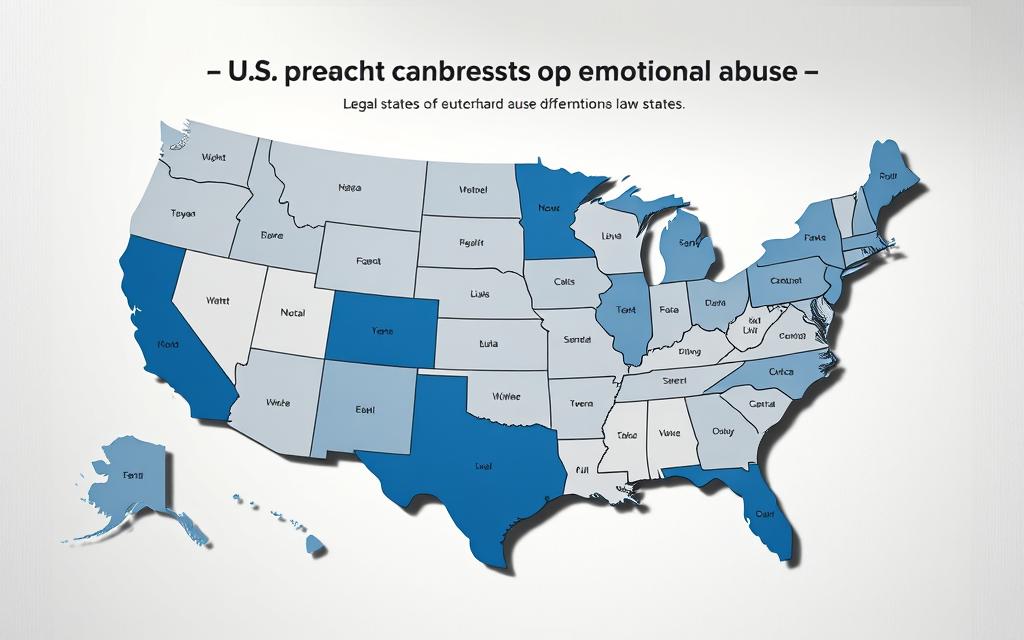
Understanding state laws on emotional abuse claims is hard. Each state handles family law and emotional abuse cases in its own way. This makes it tough for survivors to find justice.
How states deal with emotional abuse laws affects victims’ legal options. It’s key for anyone thinking about legal action to know these differences.
State Law Variations
States have different ways to recognize and protect against emotional abuse:
- Michigan has strong laws to protect domestic violence victims
- Reporting rules change from state to state
- Some places let victims get personal protective orders for emotional abuse
- How much money victims can get varies by state
Notable Legal Insights
Here are some examples of how states handle emotional abuse laws:
- Michigan: Has clear rules for emotional abuse cases and strong protections
- Nevada: Has a two-year limit to file emotional distress claims
- North Carolina: Uses federal funds to help with domestic violence
Emotional abuse laws now see the harm of non-physical trauma. They know it can hurt as much as physical harm.
Survivors need strong evidence when fighting for their rights. Medical records, expert opinions, and personal stories help make a strong case in family law and emotional abuse cases.
Seeking Therapy and Support
Survivors of emotional abuse face big challenges in their recovery. Mental health laws help them find healing and justice. Getting professional help is key for recovery and legal claims.
Therapy helps survivors understand and deal with their past. Mental health experts give important documents. These documents help prove the harm caused by emotional abuse.
Importance of Mental Health Support
Recovering from emotional abuse needs a lot of support. Therapy offers many benefits:
- Developing coping mechanisms
- Understanding psychological patterns
- Rebuilding self-esteem
- Processing traumatic experiences
Resources for Survivors
Survivors have many ways to heal:
| Resource Type | Description | Potential Legal Impact |
|---|---|---|
| Individual Counseling | One-on-one professional therapy | Provides documented psychological assessment |
| Support Groups | Peer-led healing communities | Offers testimonial evidence |
| Online Resources | Digital support platforms | Connects survivors with professional networks |
Professional documents of emotional distress can really help with legal claims. Mental health experts can show the harm caused by abuse.
Dealing with the Aftermath
Surviving a psychological abuse legal case takes a lot of strength. It’s a tough journey to heal after such a lawsuit. Victims must work hard to rebuild their lives and deal with the emotional trauma.

Rebuilding your life after abuse is important. It helps you feel strong and mentally well again. Here are some key steps:
- Seek professional mental health counseling
- Establish strong support networks
- Practice self-care and emotional regulation techniques
- Develop personal boundaries
- Reconnect with personal goals and aspirations
Moving Forward After Legal Challenges
The legal battle can be very tiring. Survivors need to know that healing takes time. Getting help from therapists is key to dealing with feelings and finding ways to cope.
Rebuilding Personal Confidence
Legal cases can leave deep scars. But, there are ways to regain confidence:
- Engaging in trauma-informed therapy
- Participating in support groups
- Gradually rebuilding trust in relationships
- Investing in personal growth and skill development
| Recovery Strategy | Key Benefits |
|---|---|
| Professional Counseling | Structured emotional processing |
| Support Groups | Community connection and shared experiences |
| Personal Development | Rebuilding self-esteem and independence |
Healing is a journey that needs patience and kindness. Remember, asking for help shows you are strong, not weak.
Public Awareness and Advocacy
Understanding emotional abuse has changed a lot in recent years. More people now know about it. This has helped victims get the legal rights they deserve.
Advocates have changed how we see emotional abuse. They show how it deeply affects people’s minds.
Breaking the Silence
Here are some ways to raise awareness:
- Educational campaigns in schools and workplaces
- Social media programs
- Support groups for survivors
- Training for professionals to spot emotional abuse
Transforming Legal Perspectives
Advocacy groups have made big strides in the law. They prove that emotional harm is as bad as physical harm.
| Advocacy Focus Areas | Impact |
|---|---|
| Legal Definition Expansion | More protection for victims |
| Public Education | More people understand |
| Support Services | Better help for survivors |
Advocates keep pushing for change. They help us see emotional abuse in a new light. This leads to better laws and understanding.
Frequently Asked Questions
Understanding emotional abuse laws can be tough. Many people ask if they can sue for emotional abuse. Knowing the legal steps helps survivors decide if they should seek justice.
Legal experts say you can sue for emotional abuse without physical harm in some cases. Survivors often have many questions about emotional abuse claims.
Top Legal Questions Addressed
- Can I pursue a lawsuit for emotional abuse without physical evidence?
- What documentation is key for a strong case?
- How do courts judge emotional distress claims?
- What kind of compensation might I get?
Critical Legal Myths Debunked
- Myth: Emotional abuse is hard to prove in court
Reality: Courts now see psychological harm as a valid reason for legal action.
- Myth: Only physical abuse deserves legal action
Psychological trauma can hurt as much as physical injuries. Courts understand this.
Compensation Insights
Courts might give damages for emotional distress, like:
- Costs for psychological counseling
- Lost wages because of trauma
- Money for mental pain
- Costs for getting better
Emotional abuse claims need a lot of proof. Things like expert opinions, medical records, and your own story can help your case. This is when you might want to seek legal help for the harm you’ve suffered.
Conclusion: Taking Action Against Emotional Abuse
Survivors of emotional abuse have strong legal options. They can seek justice through personal injury claims. The journey to healing starts with knowing your rights and taking action.
Legal options for emotional trauma help hold abusers accountable. They also offer a chance for compensation.
Emotional abuse cases need strong evidence and detailed records. Alabama’s laws show how complex these cases are. Courts want clear proof that emotional harm affects daily life.
Survivors must collect medical records, witness statements, and expert opinions. This helps build a strong case.
Justice goes beyond just lawsuits. Society must also help prevent emotional abuse. We need to support each other and have clear rules.
Legal action is powerful. It helps survivors, sends a message to abusers, and fights against emotional harm. Knowing your rights and getting legal help can lead to change.




One Comment
I want to keep this short and focused on the facts. For several years, I experienced ongoing retaliation, bullying, and emotional distress within the Issaquah School District. The situation escalated over time, ultimately leading to my forced resignation.
Key points include:
Retaliation connected to a sexual harassment lawsuit
Whistleblower issues and denied accommodations
Bullying and emotional distress over six years
Formal complaints submitted but not properly addressed
Retaliatory reassignment, loss of planning time, and unfair workload changes
Constructive discharge/forced resignation despite long tenure and proven records
There is documentation going back to 2019 supporting these events. Many staff have also left the school under the same leadership, showing a broader pattern of problems.
This is not an isolated incident but a repeated cycle of retaliation and intimidation. I wanted to share my experience so others can be aware of what has been happening.